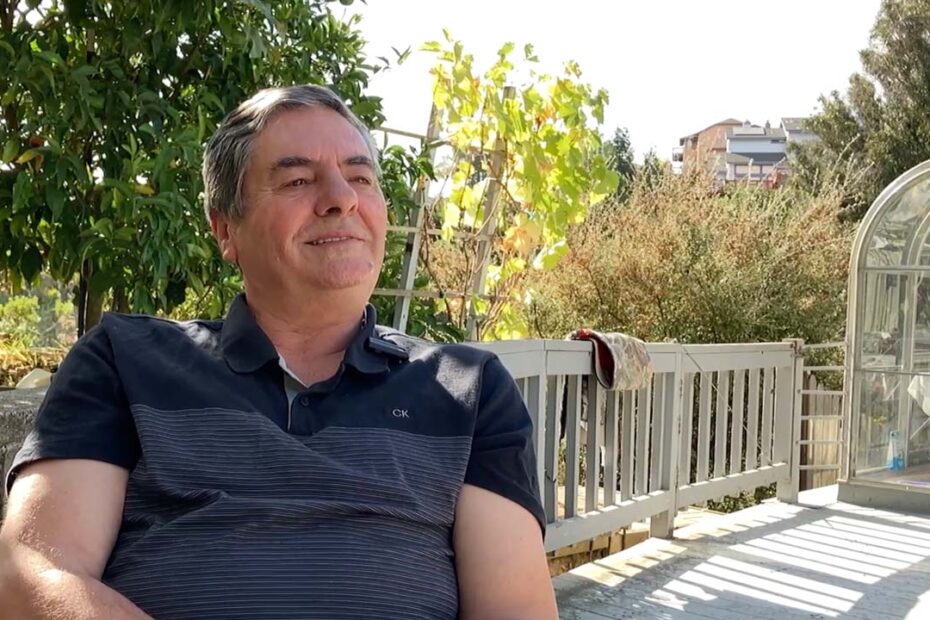
Watch the full interview on Youtube
George Andronie didn’t grow up dreaming of comfort. He grew up learning quotas, lines, and limits—how much bread a family could buy, how often hot water came, how quickly the lights went out. In Budieni, near Târgu Jiu, his parents raised nine children on hard work and ingenuity. Everyone had a task. Homework got done in the field while a cow grazed.
Even as a boy, George’s imagined the west. He studied an old globe and wondered how you reach America – half-joking that you could dig a hole straight through the earth. Later, a neighbor returned from abroad in a Mercedes, and the idea stopped being a fantasy. Someone, somewhere, lived differently.
By the 1980s, Romania tightened like a fist. George marries Elena and they start a family. They raise a son and daughter in a concrete apartment that baked in summer and froze in winter. The TV ran two hours a night. Having bread on the table required hours in line, and you could still arrive too late. Sugar was rationed. Meat was only a rumor. If you didn’t “know someone,” you didn’t get anything. Around them, families who tried to leave were harassed and followed.
So, George chose the unknown. On October 9, 1985, he walked out of his home knowing he might never return. His daughter was four months old. His son was five and a half. His wife cried. He carried a small bag—bread, a few cans, glucose tablets, spare clothes—and a larger burden he didn’t name: responsibility.
Near the Danube, he and three others waited in an acacia forest while a moving searchlight swept the water. They lay flat and still, letting the beam pass. When night thickened, they stripped to shorts, sealed their clothes in plastic, inflated children’s mattresses, and stepped onto the border strip where footprints could condemn you. Then they entered the river.
The Danube was wide, dark, and indifferent. George fixed his eyes on a single light across the water and prayed the kind of prayer you pray when you’ve run out of options—simple, honest, surrendered. A ship’s searchlight flared nearby and he thought, “this is where my story ends”. Then it vanished. He reached the far shore with nothing left in his body but relief.
Freedom didn’t arrive with fireworks. It arrived with pursuit, cold nights, and the stubborn decision to keep moving. In Belgrade, Serbia they slept outside through rain, washed up, and walked into the U.S. embassy with shaking hands. The path forward included prison, interviews, and months in a refugee camp, but the direction was set.
George’s courage wasn’t loud. It was faithful. It was the willingness to face the unknown so his children wouldn’t have to. He still marks October 9 as the day he left everything familiar and trusted God to carry him. “If you work and get an education, you can do anything,” he says. “But without God, you can’t do anything.”
His story carries this message: remember what tyranny costs, protect freedom, and keep faith alive for your generation.
Questions for reflection:
- Is it desperation, hope, fear, what drives people to freedom by such drastic measures?
- How would you feel as a woman and wife if your husband left you behind in search of a better life? How would you survive with two young children?